
Hohoho, December is in the house! And like every year the great Christmas tree debate begins. Real or artificial? Traditional or alternative? I mean, people LOVE defending their choices while questioning everyone else’s. But what if the answer was simple? After trying different options over the years, I’ve learned that the best Christmas tree choice really depends on your priorities, living situation and what you’re willing to compromise on.
The Classic Debate: Real vs. Artificial Christmas Tree
Real trees offer that amazing pine scent and holiday magic that many of us grew up with. They’re biodegradable, that’s great, and often locally sourced from farms that ensure proper renewal. However, they’re usually sprayed with a cocktail of pesticides throughout their growing period and need to be disposed off properly. Artificial trees are plastic. That’s not great but they can be reused for years. They’re convenient and often more cost-effective long-term but they need to be used for at least 10 years to offset their carbon footprint compared to real trees. So let me spill the beans.
My Thoughts On Every Tree Option
Over the years, I’ve experimented with nearly every Christmas tree option available, and each has taught me something different about what mattered the most to me.

Real Trees: There’s nothing like a fresh-cut tree. The smell alone transforms your entire home into a winter wonderland. The look too can’t really be replicated. But then we have the needles situation. Even if you keep your tree in water, they will fall and you’ll be finding pine needles in corners of your home well into March. And after the holiday, you have to dispose of it. Easy if you have a garden with a compost but it’s another story if you live in an apartment and your city doesn’t collect trees in January. And finally, trees are not cheap, especially if you want a decent size and shape. For me, the cost and constant cleanup makes it unsustainable as an annual tradition.
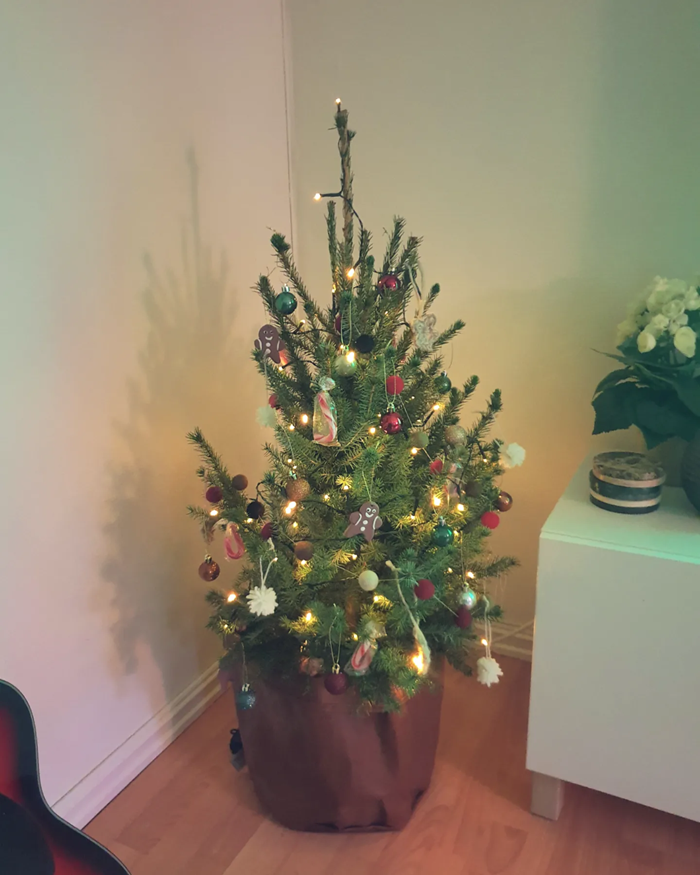
Potted Trees: On paper, this seemed like a good compromise: a real tree I could keep alive and reuse every year. In practice, not so much. I still had to deal with needles, though fewer than with a cut tree. The watering between all the ornaments was tricky, and finding a spot to store it for the other eleven months of the year proved challenging. But that’s not the worst part? The tree I purchased from a local store had been topped improperly… on purpose, with most of its growth buds removed so that I blame its death on my lack of gardening skills and buy another next year. So I learned that if you wants to go this route, you need to be careful where you buy it from and have space for year-round care. An alternative that might be available where you live is potted tree rentals, but it’s not that common.
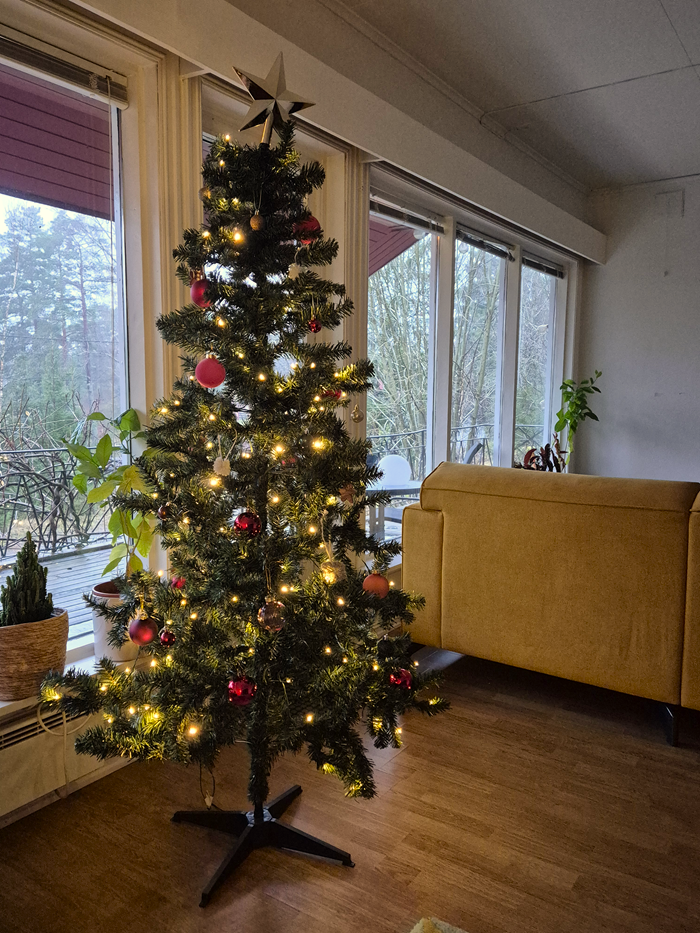
Artificial Trees: After my potted tree failure, I took a different approach and bought a second-hand artificial tree and it cost me a fraction of the retail price. And the lights are built in! It’s been super convenient and I’m committed to keeping it for many years to justify its environmental impact. The truth is that now that I live in the middle of a spruce forest, I can live without the scent. It gets the job done and if really I want my home to smell like the holidays, I can always light up a scented candle (the healthy kind of course).
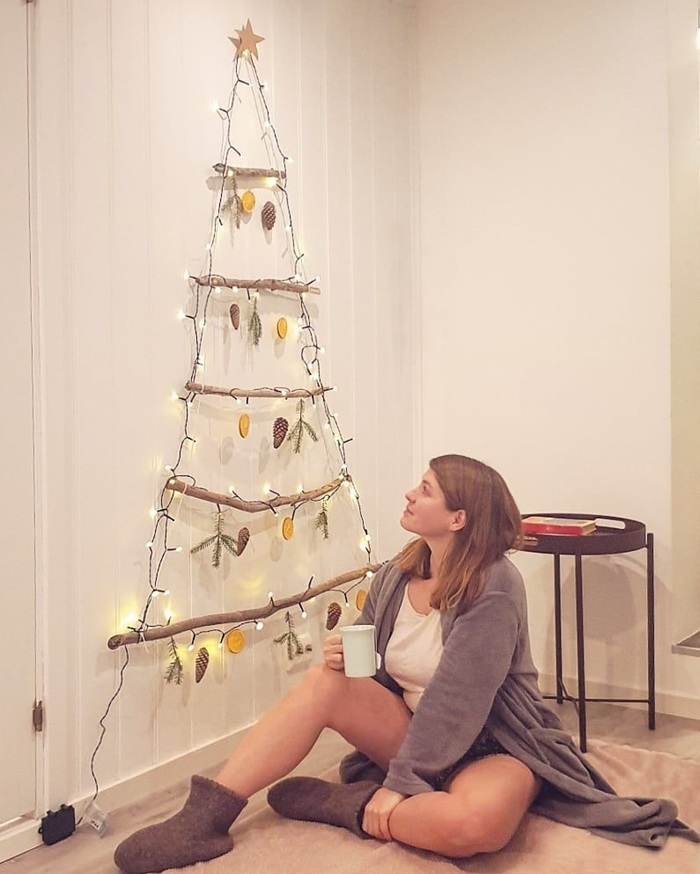
DIY Trees: When I was tight on both space and budget, I experimented with DIY zero-waste trees made from foraged branches and string lights. I even made the ornaments myself. Actually, I did it three years in a row and it was always surprisingly easy to put together. The trees took up minimal floor space (perfect for my apartment at the time), and cost next to nothing. It looked very cool but maybe it wasn’t as Christmassy as a regular shaped tree. But overall, I would highly recommend this to anyone creative. I went for branches but I saw really cute ideas using cardboard or paper. Pinterest is a gold mine for this.

The Bottom Line
In my opinion there’s no perfect Christmas tree. It all comes down to what matters to you. Real trees win the vibe check but demand more effort and money. Artificial trees offer convenience but require a long-term commitment to be sustainable. Alternative options like DIY or potted trees work too but they might not be for everyone. The most sustainable choice might simply be the one you’ll actually stick with and enjoy.
Leave a Reply